Hi, I’m Mel.
I help surgeons
build lives
they love
without walking
away from the
careers they
worked
so hard to
create
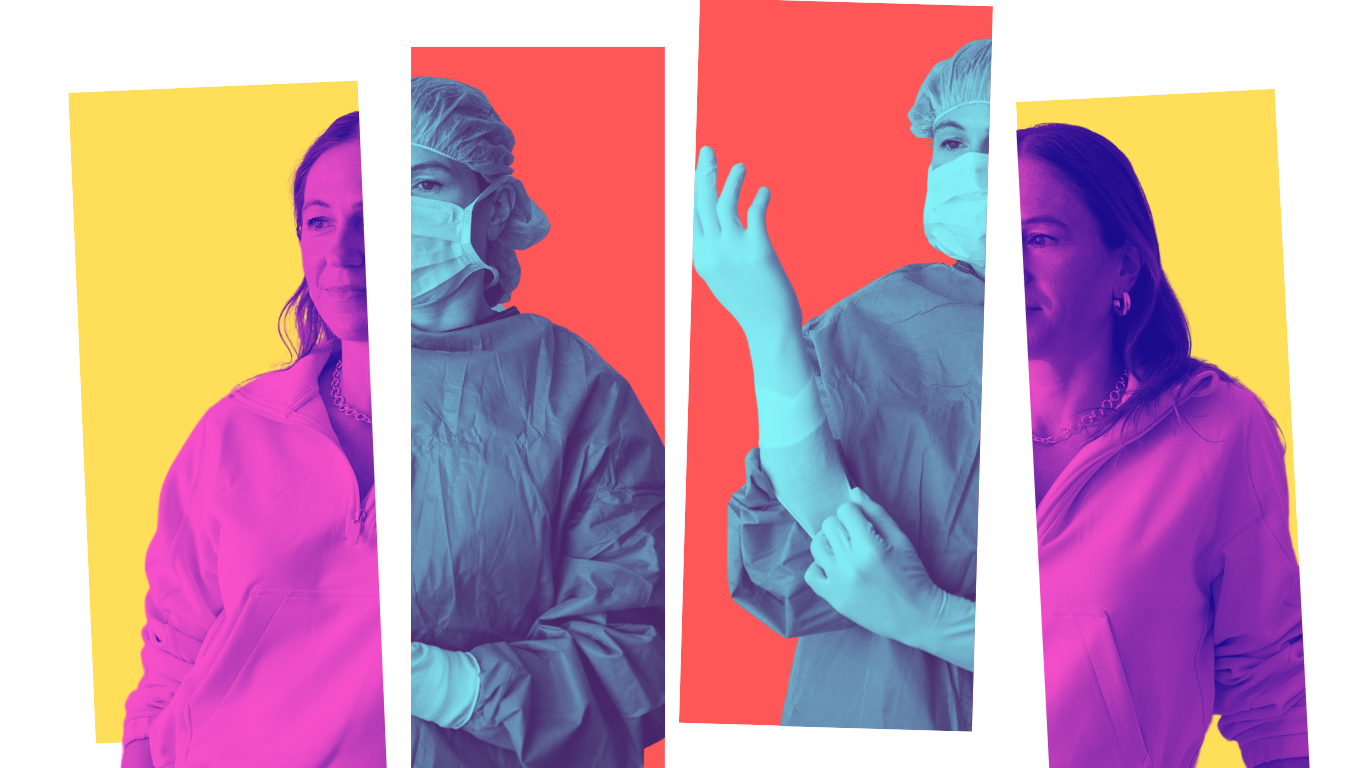
Yes, you can take out a gangrenous gallbladder, repair an aortic aneurysm, or reconstruct an airway like an absolute boss.
But no one ever taught you how to manage your nervous system when blood fills the field, equipment stops working, or your brain suddenly decides that that dense fiber you just cut is nerve.
The complications that keep you up at night. The moral injury of a system that is designed to maximize profit. The part of you that recognizes that you’re an adult with a really high-stakes job.
This is where you understand and own all of it with authority.
The Empowered Surgeon Success Formula:
1. Protect the asset (YOU)
2. Serve the patient
3. Diversify your professional identity
Empowered surgeons change the culture of surgery. And it starts with you.
When surgeons stop practicing from fear and start practicing from authenticity and self-trust, something shifts. In the OR, exam room, and in the profession itself.
That is what this work is for.
In my TEDx Talk, I explore why this matters through the way fear hijacks judgment. Using the framework of white swans, black swans, and red swans, I unpack how defensive, fear-based thinking narrows our vision and distracts from the truth.
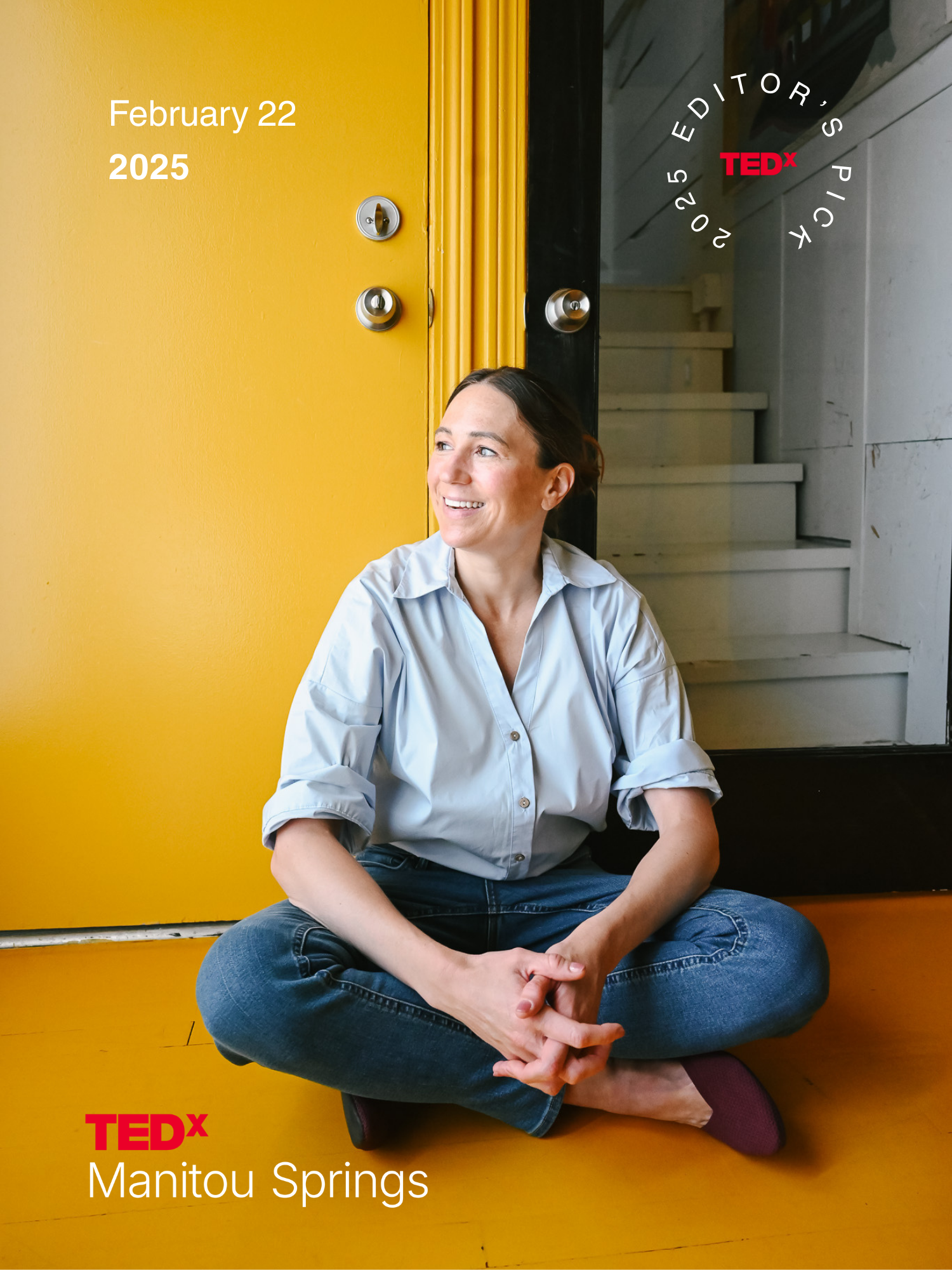

A little about me…
ENT Surgeon/Rhinologist, 13 years post-fellowship
Master Certified Coach, Martha Beck Wayfinder Program
Two TEDx talks, one selected as Editor's Pick — 230K+ views
Host, Surgeons with Purpose podcast
I built the resource I couldn't find.
I was the most productive partner in my practice. The nose and sinus surgeon everyone referred to. But I was suffering.
I had no language for what was happening. No tools. No one to call who understood what it meant to drag my ass to work against my will, crying the entire way, then stand in an OR with my nervous system firing on all cylinders.
So I built the resource I once needed. Everything inside Empowered Surgeons Group comes from my own evolution and hundreds of hours coaching surgeons who have been there, translated specifically for the surgical mind.
This is not generic life coaching. It's built for the surgeon who replays every complication on the drive home, apologizes before anyone blames them, refreshes the patient portal after a difficult case, and secretly wonders if one bad outcome means they never should have been a surgeon in the first place

Isn’t it exhausting? Shoving your magnificent square peg ass into surgery culture’s round hole?
In surgical training, you sacrificed your twenties learning how to cut into human bodies, dissect out critical structures, control catastrophic bleeding, and keep patients alive through the night in the SICU.
Yes, you learned how to manage the patient who has a major postop complication. But what about how to look at your next patient’s post-op imaging without shitting your pants?
Or how to sleep without replaying every move of the case in your mind?
Or how to talk to the patient who is unhappy with their result?
Or how to stop believing that one mistake erases one thousand successes?
Inside my programs, we build the part of you that drives everything else: your self-concept.
You become The Asset.
Your relationship with yourself becomes your greatest professional advantage.
You protect your time and energy before they are gone.
You stop outsourcing your worth to RVUs, patient reviews, promotions, surgical outcomes, and other people's opinions
You learn to separate who you are from what happened.
So complications become opportunities to lead instead of evidence that you're a fraud.
Peer review becomes feedback instead of a verdict.
A lawsuit becomes a legal event, not an identity crisis.
One angry patient no longer outweighs the hundreds whose lives you've changed.
Communication becomes your superpower.
You know how to sit with an angry family without becoming defensive.
How to deliver difficult news with confidence and compassion.
How to navigate conflict with administrators, colleagues, and staff without abandoning yourself.
How to build trust with patients before, during, and after surgery.
And when your identity expands beyond "surgeon," everything changes.
You no longer practice from fear.
Not fear of complications.
Not fear of lawsuits.
Not fear of complaints, bad reviews, losing your job, or disappointing everyone around you.
You practice from grounded authority and self-trust.
From the subtle confidence that comes from knowing no outcome, institution, or person has the power to define who you are.
No one gets to define you but you.
Empowered Surgeons: Where Surgical Mastery Meets Self-Mastery
Empowered Surgeons is a program, a practice, and a growing movement.
It exists to address a problem hiding in plain sight:
A profession built on service, rigor, and excellence that trains people to override themselves in order to survive.
I answered this call first in myself.
What I discovered wasn’t another achievement to chase. It was a new way of relating to myself and to others. A way to honor my values and realign with purpose.
Empowered Surgeons is grounded in integrity: the alignment of body, heart, mind, and spirit.
When that alignment returns, something powerful happens:
You stop suffering from the constant pretending and self-denial our culture rewards.
You begin to see your life, and your profession, through an entirely new lens.
I know why surgeons don’t ask for help.
The stigma.
The conditioning.
The unspoken rules.
The belief that you should be smarter than this.
But no one is smarter than their own suffering.
What you can do is learn to work with it—to master your mind, understand your emotions, and create a life you actually look forward to waking up to.
At its core, this work is about one thing:
Living with your will.
About the empowered surgeons program + space

In Empowered Surgeons, we set down perfectionism, comparison and competition and pick up self-trust, authenticity, and connection.
Here, we remember that life is bigger than the OR, and that being human is what actually supports you in doing this work well. What you’ll find is an earnest teacher wholeheartedly invested in your human side as much as your surgeon self—someone who understands the highs, lows, extremes, and particular challenges you face in surgery.
Empowered Surgeons is a place to practice presence, boundaries, humanity, relational competency, and leadership in the hardest rooms: the OR, clinic, C suite, and at home.
This isn’t just about your career. It’s about the culture of surgery. It’s about preparing you not just to survive surgery, but to have a life beyond it — because one day, whether by choice or retirement, you will.
I can’t know why you’re here until you tell me.
Maybe you’re exhausted. Maybe you recently had a surgical complication that shook you. Maybe you thought your life would feel different.
I can't know why you're here until you tell me. But whatever brought you (a complication, a hard season, a quiet sense that something needs to change), I'm glad you came.
Start anywhere. The free checklist is a good first step. The call is better.
PROGRAMS + OFFERSLet’s explore what might be right for you, right now.
empowered surgeons, the online program + group
The ongoing program. Weekly live coaching, 31 lessons, lifetime access. Built for surgeons who are ready to do the work and want a community doing it alongside them.
$2,997 · Lifetime access→ See what's inside
Trainee to attending masterclass
Four videos. The mindset, belief, and identity tools that nobody hands you on the day you become an attending. Companion workbooks included.
$197 · Lifetime access → Enroll now
1:1 Coaching
A dedicated space with a high-level partner. For when bringing your most vulnerable truths into a group isn't the right move yet.
By consultation → Schedule a call